

Arabic Language Odyssey: Exploring Diverse Dialects in SWANA
Author: Bre Pyfrom
Embarking on a linguistic journey through Southwest Asia and North Africa (SWANA) is like stepping into a vibrant tapestry woven with cultures and languages. In this post, I explore the importance of adapting to local dialects in SWANA and share how I navigated the rich linguistic landscape of the region.
The term SWANA covers many countries, and each has its own linguistic identity. Arabic language, Persian, Turkish, Kurdish, and Berber are just some of the threads that shape this region. Early on, what stood out to me was the diversity within these languages. Each area has its own dialects and unique linguistic nuances.
Arabic Lanugage Across SWANA
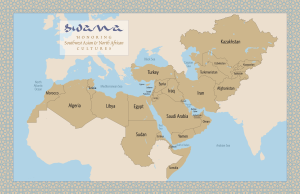
SWANA is far from a monolith. Instead, it is a mosaic of countries with different linguistic flavors. Arabic language is the most widely spoken and often acts as a unifying thread. However, its many dialects are where the real linguistic journey begins. From the Maghreb to the Levant, and from the Gulf to the Arabian Peninsula, Arabic language shifts, adapts, and reflects the cultural nuances of each community.
Beyond Arabic language: Persian, Turkish, Kurdish, and Berber Contributions
Beyond Arabic language, other languages also enrich the region. Persian in Iran carries a poetic cadence tied to a long literary tradition. Turkish blends Turkic and Ottoman elements across Anatolia. Kurdish reflects resilience and identity in mountainous regions. Berber, spoken across North Africa, predates Arab expansion and offers a reminder of the region’s ancient heritage.
 Dialects in SWANA are not just linguistic variations. Instead, they are repositories of culture. For example, the Maghrebi dialects show the influence of Arab, Berber, and French histories. Levantine dialects hold memories of old trade routes. Meanwhile, Gulf dialects carry traces of maritime trade and Bedouin traditions.
Cultural Significance of Dialects

Organic Exploration without Apps
Language and Culture Interwoven
SWANA’s linguistic diversity is deeply tied to culture. Dialects are not isolated systems; they are living expressions of community. By stepping away from apps and into daily life, I connected not only with words, but also with customs, social codes, and shared histories.


Best Places to Visit in Rabat to Practice Your Arabic or Darija
If you’re planning to study Arabic in Rabat, the best way to reinforce your language learning is by immersing yourself in
Study Arabic in Morocco: A Guide to Classical Arabic vs. Darija
The Differences Between Classical Arabic and Darija: How to Choose Between the Two? For anyone planning to study Arabic in
10 Essential Darija Phrases Every Traveler Should Know Before Visiting Morocco
When traveling to Morocco, learning a few key expressions in Darija, the Moroccan Arabic dialect, can make a world of