Learning Language through Food

Author: Annika

I’ve had many memorable experiences during the past three weeks in Morocco. My main reason for traveling here this summer was to learn Arabic and study Darija, the regional dialect spoken across the country. However, I also arrived eager to explore the local cuisine. Language and culture are closely connected, as I often heard in my language classes.
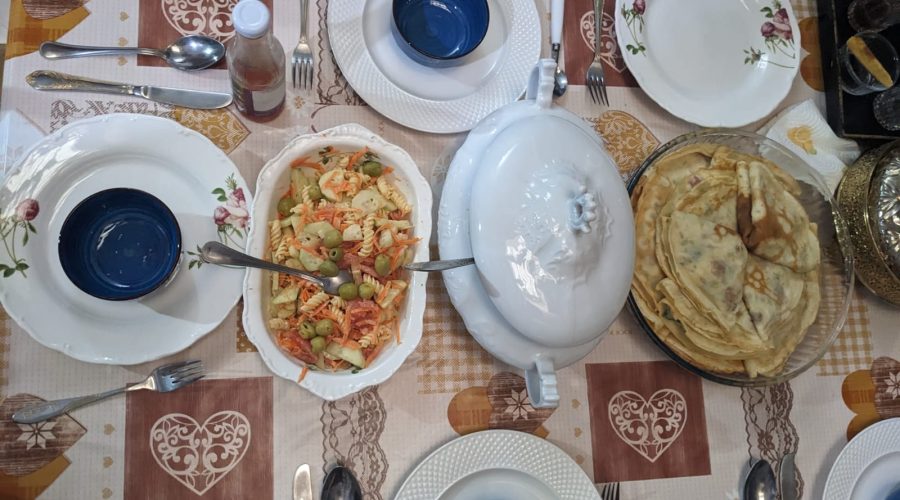
One of my favorite experiences involved a cooking workshop where I learned to make tajine, a traditional slow-cooked dish with vegetables, meat, dried fruits, and spices. We spent several hours in the kitchen of a local family. They welcomed us warmly and guided us through the preparation process. We watched the dish evolve at each stage—from chopping fresh vegetables to carefully layering them in the clay tajine, adding spices, and finally seeing the finished dish bubbling with juices.

We also learned to bake the traditional round bread sold on almost every street in Rabat. Simple ingredients like flour and water come together to create the perfect accompaniment for our tajine. We shaped the dough and baked it over a wood-burning oven. Whether baked over fire or in a gas oven, this bread is essential to Moroccan cuisine, complementing dozens of dishes.

Enhance Arabic Study Through Moroccan Culinary Traditions

Through these experiences, I observed how different people prepare the same dishes. My host mother, for example, adds simsim (sesame seeds) to her recipes. This small addition enhances both flavor and texture.

Food is more than cultural—it connects directly to language. Despite three years of Arabic classes at university, I discovered much new vocabulary related to food. Asking the name of a dish or ingredient sparked conversation and revealed cultural nuances. I also noticed the differences between Moroccan Arabic and Standard Arabic. For instance, the Moroccan word limun might mislead English, French, or Spanish speakers into thinking it means “lemon,” when it actually refers to an orange!

Learning Arabic through cooking has been one of my favorite ways to immerse myself in the culture. Food provides a natural, everyday opportunity to learn Arabic, expand vocabulary, and connect with the people around me.


Discover the rich flavors and vibrant culture of Morocco while you learn Arabic and enhance your language skills. Join us for a culinary and linguistic adventure that blends tradition, language, and unforgettable experiences.


Leave a Reply

Your email address will not be published. Required fields are marked *